Timber fencing
Timber paling fences on the Sunshine Coast
The warm, classic back fence, built straight and solid: palings butted or lapped, a capping rail to finish the top, and gates that match.
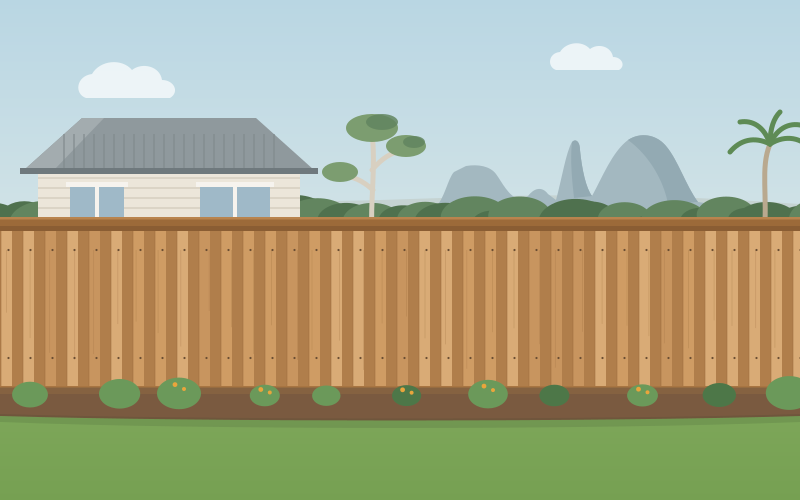
Three ways to build a paling fence
Good to know
- Heights. 1.2 m for a front fence, 1.5 m for part privacy, 1.8 m as the usual boundary height, and 2.1 m where you want more screening.
- Timber. Treated pine palings are the common choice; hardwood costs more and weathers to a silver-grey if left unoiled.
- Looking after it. A stain or oil every few years keeps the colour and slows weathering. Left natural, it greys off evenly.
- Shared boundaries. In Queensland, neighbours usually share the cost of a standard dividing fence. The price guide shows each side's half.
Questions
Timber fencing questions
Lapped or butted palings: which should I choose?
Butted palings cost less but open small gaps as they dry. Lapped palings overlap the joins, so the fence stays private. For a boundary between two backyards, most people choose lapped.
What does capping do?
A capping rail runs along the top of the palings. It covers the end grain, which is where timber takes in water, and gives the fence a straight, finished top.
Timber or Colorbond?
Timber has the warmer, natural look and is easy to repair a paling at a time. Colorbond won't rot or feed termites and needs almost no upkeep. Compare them side by side in the styles gallery, or price both in the guide.
Other fence styles
Planning a timber fence?
Call Monday to Friday, 7 am to 4 pm, or send the details and we'll get back to you.